
Improve Precision and Accuracy with Partner Passing Drills
The Partner Passing Drill is a basketball drill designed to teach kids how to pass the ball to a specific target. The main objective of this drill is to improve the players’ precision, accuracy, and communication when passing the ball.
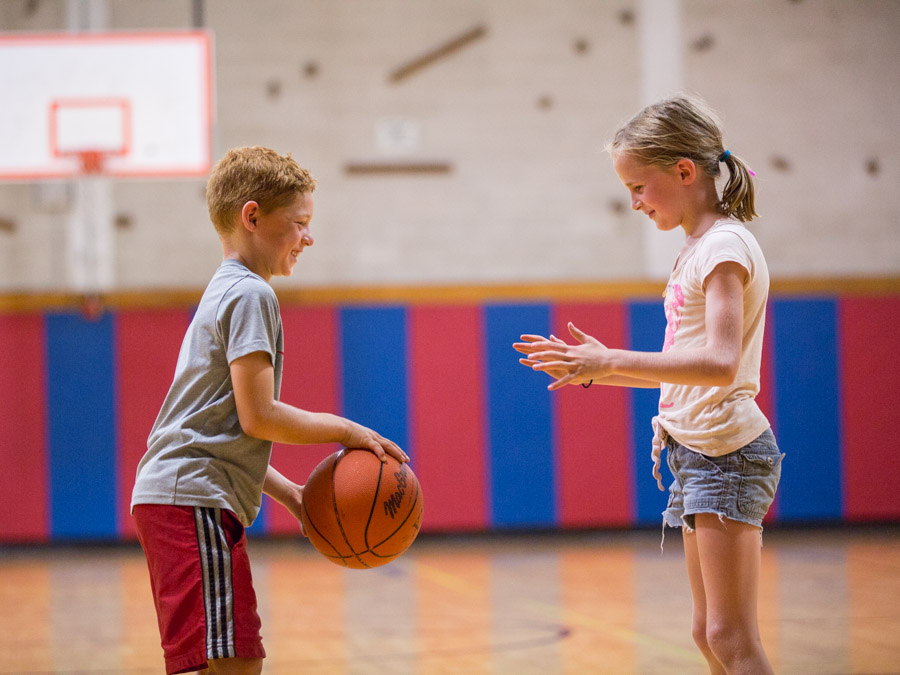
To perform the Partner Passing Drill, the coach should have the players pair up and stand about 10 feet apart from each other. The coach can also use different colored cones or markers to indicate the type of pass that should be made (e.g. chest pass, bounce pass, etc.).
The players will then pass the ball back and forth to each other, trying to hit a specific target with each pass, such as a specific body part or a spot on the floor. The coach should observe the players’ form and technique, making corrections as needed. It’s also important to praise and encourage the players for good passes and progress.
The coach can also add a competitive element to the drill by timing the players to see how many passes they can complete in a set amount of time.
The Partner Passing Drill can be modified for different age groups, skill levels, and team sizes. This drill can also be used as a warm-up drill to start practices, or as part of a team’s passing practice.
To make the drill more challenging, the coach can increase the distance between the partners, this will help kids to practice passing over longer distances and also make them think about the best way to pass the ball.
Another way to make the drill more challenging is to limit the number of passes each pair can make. This will force kids to be more efficient with their passes and also make them think about the best way to pass the ball to the target.
It’s important to note that this drill should be done at game speed, and to keep the drill moving so that the players don’t get bored. Also, coaches should make sure to switch up the type of passes that are being used so that kids get practice with different types of passes.
Overall, the Partner Passing Drill is a great way to help kids improve their passing skills, precision, and accuracy. It’s a drill that can be modified and adjusted to suit different age groups, skill levels, and team sizes. By incorporating this drill into practice, coaches can help kids develop the skills they need to become effective passers on the basketball court and also help them to improve their communication and teamwork.
Another variation of the Partner Passing Drill is to add a defender to the drill, this will help kids to practice passing while avoiding the defender and also make them think about the best time to pass the ball.
Another way to make the drill more challenging is to have the players stand in a line and pass the ball to each other, instead of just passing the ball back and forth between two players. This will help kids to practice passing to different targets and also make them think about the best way to pass the ball to the next player in line.
Another variation is to have the players pass the ball to different targets, such as a cone or a basket, this will help kids to practice passing to different targets and also make them think about the best way to pass the ball to the target.
It’s important to note that this drill should be done with proper footwork, body positioning, and communication. This drill should also be done with a focus on ball handling, as kids should be able to control the ball and pass it to the target with ease.
It’s also important to reinforce the importance of looking up and scanning the court before passing to the partner, as this will help kids to become more aware of their teammates and the defensive players on the court.
Overall, the Partner Passing Drill is a great way to help kids improve their passing skills, precision, and accuracy. It’s a drill that can be modified and adjusted to suit different age groups, skill levels, and team sizes. By incorporating this drill into practice, coaches can help kids develop the skills they need to become effective passers on the basketball court and improve their communication and teamwork.


